The Hidden Cost of Painting Over Damaged Stucco
Property owners across Northwest Edmonton often reach for paint when stucco looks tired. A fresh colour can lift curb appeal in Castle Downs or Oxford. It can also trap water, mask a structural issue, and turn a small repair into a major envelope failure. This article explains why painting over damaged stucco becomes expensive in our Alberta climate, how Northwest Edmonton wall assemblies behave through freeze-thaw cycles, and what a qualified actually does before recommending paint, elastomeric recoating, or replacement. The goal is simple. Protect the building, preserve warranty paths, and control lifecycle cost for homes and small commercial buildings from Beaumaris to Griesbach and Big Lake.
Why paint fails on damaged stucco in Northwest Edmonton
Stucco is not one material. In this region it shows up as three-coat portland cement plaster over wire lath on homes from the 1970s to early 2000s, acrylic finish systems on newer re-clads, and EIFS, the exterior insulation and finish system that became dominant in Alberta after 2004. Each system moves with temperature, manages water differently, and needs the right surface prep before any coating. Paint does not fix movement, water entry, or substrate decay. It hides them until winter exposes the truth.
Edmonton’s freeze-thaw cycling drives the problem. Walls swing from -30°C in January to +30°C in July. Cement plaster is hard and strong, but it does not like repeated expansion and contraction. Tiny hairline cracks open, then grow. Moisture gets behind the finish. When the wall freezes, trapped water expands and pushes coats apart. The result in Castle Downs or Sherbrooke Wellington often looks like a horizontal bulge, delamination, or efflorescence, the white salts that show water is moving through the wall. Paint over that, and the coating becomes a lid. Water stays in. Damage accelerates.
The Edmonton shift from cement plaster to EIFS explains many current failures
Here is a shareable fact that surprises many Castle Downs homeowners. Between 2000 and 2004, Alberta’s residential market shifted away from cement plaster stucco to EIFS because EIFS handled our expansion-contraction stress better. EIFS places a water-resistive barrier on the sheathing, adds insulation board such as EPS or XPS, embeds foundation crack repair solutions fibreglass mesh in a base coat, and finishes with an acrylic coat. This multi-layer assembly delivers R-3 to R-5 per inch of continuous insulation and can reduce air infiltration by up to 55 percent compared to brick or wood. It also flexes with temperature swings. That shift explains why a large share of cement plaster stucco from the 1970s through the 1990s in areas like Baturyn, Lorelei, and Dunluce is reaching end-of-life now. Many of these walls have been painted multiple times. Coatings did not stop the climate effect. They only delayed the repair decision while moisture worked behind the scenes.
What a qualified evaluates before any coating
In Northwest Edmonton, a responsible contractor does not start with colour charts. They start with a diagnostic sequence that finds the risk before a brush touches the wall. The process is fast and structured. It protects the owner from coating a problem and voiding a manufacturer warranty.
Visual survey comes first, checking hairline cracks, vertical and horizontal cracking patterns, bulges, blistering, peeling paint, chalky surfaces, water staining, and efflorescence. The next step is moisture meter mapping on suspect areas. This finds high readings that point to water intrusion. Selective probing follows on softened zones to test for delamination. The inspection includes window perimeters, door heads, and any penetrations for failed caulking or missing backer rod. It also checks step flashing, counter flashing, and drip edges at roofs and decks. Grade-level inspection confirms weep screed height and drainage at the base of walls. EIFS receives extra attention to verify the drainage plane is clear and the liquid-applied or sheet-applied water-resistive barrier is intact.
In Castle Downs and along 97 Street and 137 Avenue, many failures trace back to missing control joints on long walls and aged sealant at window surrounds. A evaluates those details because paint cannot compensate for a joint that does not exist or a weep screed that was never installed.
How painting over damage drives cost higher
The hidden cost is not the price of the coating. It is the damage trapped underneath. Once paint seals hairline cracks and micro-openings, water that enters from a flashing leak or failed sealant stays in longer. Edmonton’s winter then turns that water into ice. Ice expands and forces separation between the finish coat and the base coat. On three-coat stucco, separation often telegraphs as drummy hollow spots and then as visible bulges. On EIFS, trapped water at the sheathing creates mould and rot. Both cases trigger substrate repair that did not need to happen.
Typical Northwest Edmonton repair ranges show the curve. Hairline crack sealing on sound stucco runs about $6 to $15 per square foot. A 50 square foot zone often totals around $800 CAD. Water-damage substrate repair starts near $1,000 CAD and can climb to $5,000 CAD when rotted sheathing needs removal, new water-resistive barrier installation, and re-meshing. Add scaffolding at $200 to $400 CAD for upper-storey access along Castle Downs Road or in Griesbach infills, and the number rises. A $1,200 coating that locked in moisture can quickly turn into a $3,000 to $6,000 repair one or two winters later. Paint did not save money. It delayed and multiplied the spend.
Edmonton-specific paint and coating choices, and when they make sense
Painting stucco is not wrong. It is wrong on the wrong wall. A healthy wall accepts the right coating and benefits from it. An ailing wall fights the coating and loses structure and value.
Elastomeric stucco coatings add value to older cement plaster when the substrate is sound. These thick, flexible coatings bridge microcracks and shed water. In Edmonton, elastomeric application typically ranges from $5 to $7 CAD per square foot with prep work included. The system must be breathable enough to let vapour out while shedding liquid water. On EIFS, acrylic finish coats remain the standard topcoat because they preserve permeability and movement capacity. Standard acrylic latex exterior paints suit many recoat projects, but they should follow proper crack sealing, surface cleaning, and primer compatible with stucco or EIFS finishes.
Recoating intervals land between 8 and 15 years depending on exposure. Homes along open corridors near Anthony Henday Drive and Big Lake feel stronger wind load and more driving rain. These walls benefit from higher-flex finishes and tighter flashing details. Sheltered homes inside Beaumaris or Oxford can push longer intervals between recoats. Every decision starts with an envelope check, not a chart.
Common Northwest Edmonton failure patterns that paint hides
The same problems show up from T5X postal codes in Castle Downs to T5T and T5Y construction around Big Lake. The names change. The patterns repeat.
Freeze-thaw hairline cracking forms in a map pattern on south and west elevations. Horizontal bulges appear mid-wall on taller cement plaster facades where the second-layer cement cannot absorb movement. Efflorescence bands mark areas where water is moving through the stucco and depositing salts. Around window and door perimeters, failed caulking draws faint dirt lines and lets water enter. On EIFS, impact damage from hail or a ladder leaves divots that look small but open pathways to the foam and sheathing. On parging at grade, crumbling sections show frost action at the foundation edge. Paint hides all of this for one season. Then the lines reappear, usually worse, because moisture was locked behind the fresh coat.
Cost comparisons: coating a sound wall versus repairing later
On a healthy cement plaster wall with minor wear, a breathable elastomeric coating at $5 to $7 per square foot, with crack sealing and primer, can extend service life by a decade. On EIFS, a new acrylic finish coat in the $9 to $15 per square foot range as part of a broader refresh helps colour retention and seal micro-fractures in the finish. Compare that with the repair path when paint covers active water intrusion. Substrate repair at $1,000+ CAD is routine. Full moisture remediation can reach $5,000+ CAD when sheathing replacement and new drainage plane elements are required. The economics favour inspection and targeted stucco repair before any coating work.
Why Northwest Edmonton walls fail faster when painted without repairs
Coatings change how a wall dries. Older three-coat cement plaster was built to get wet and dry again through the face. Paint can slow that dry-out. If flashings or sealants fail, the wall gets wet from behind and cannot vent forward. In freezing weather, the ice layer grows behind the paint skin and inside the stucco pores. Expansion creates pressure. Pressure forces delamination. Delamination gives water more room. That cycle accelerates breakdown in cement plaster and sets up rot in EIFS sheathing. The end is the same. Costly repair.
The link between stucco paint, parging, and foundation concerns
Many owners search how to repair a cracked foundation after they notice paint peeling low on the wall or spalling parging. In Northwest Edmonton, the problem often starts with splashback at grade, poor downspout control, or buried weep screed. Painting the stucco right down to the sidewalk can trap moisture. Water then works into the parging and the top edge of the foundation. The right response is not a heavier paint. It is a drainage and detailing fix. That can include re-establishing the weep screed line, repairing parging, improving slope, and resealing transitions with proper backer rod and sealant. Addressing grade and parging is part of responsible exterior maintenance before any recoating. It is also a reason the work should be coordinated by a who handles stucco and parging together.
Castle Downs heritage, Griesbach redevelopment, and how those histories affect stucco work
Castle Downs carries a Scottish-castle-themed naming pattern across Baranow, Beaumaris, Caernarvon, Carlisle, Elsinore, and more. Much of that housing stock rose between the 1970s and 1980s with cement plaster stucco. Those walls are now into their major repair window. Many have been painted two or three times. Paint cannot change physics. The same freeze-thaw stress acts every year. A responsible plan in these neighbourhoods starts with a section-by-section assessment, joint placement review, and decision on repair versus re-clad for the next 25 years.
Griesbach brings a different profile. The 620-acre former Canadian Forces base, bounded by 153 Avenue NW, Castle Downs Road NW, 137 Avenue NW, and 97 Street NW, was redeveloped by Canada Lands Company as a LEED ND pilot. Much of the stucco is newer, often EIFS, and built to modern energy and moisture standards. Failures here often come from incidental impact or isolated detailing misses at decks, balconies, and parapets. Painting over these misses does not fix the drainage plane. It prevents drying. The right repair keeps the LEED-era performance intent intact.
Big Lake winds, Palisades exposures, and coating selection
Hawks Ridge, Starling, and Trumpeter sit near open wetland and Big Lake. Wind-driven rain is real. Coatings on these elevations must resist water while staying vapour-permeable. They must also flex. On a calm day, a paint that looks perfect in a showroom can feel brittle on a west wall six months later. The Palisades, including Oxford, presents 1990s and early 2000s exteriors that often mix stucco with other claddings. Transitions between materials need expansion joints and careful sealant selection before any paint goes on. Ignoring those joints invites cracking that no coating can hold back.
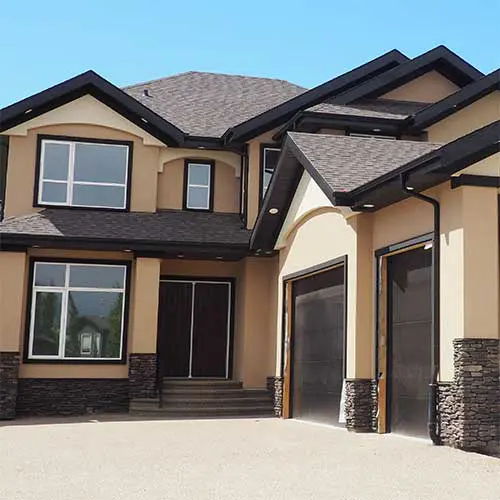
EIFS versus cement plaster: coating and repair decisions differ
EIFS is lighter, about 2 pounds per square foot, and relies on a continuous insulation layer with a base coat and acrylic finish. It needs breathable finishes and careful puncture repair. Cement plaster is heavier, harder, and often more brittle in our climate. It needs jointing discipline and flexible patch compounds that move with the wall. Coating an EIFS wall with a non-breathable paint can trap moisture at the sheathing. Coating a cement plaster wall without sealing micro-cracks invites water through the smallest pathways. A will test, not guess, before specifying the system.
Repair versus re-clad: cost, service life, and Alberta climate logic
Northwest Edmonton owners often face a choice. Repair and recoat the existing stucco, or step into a full re-clad. The numbers help. Traditional cement plaster stucco installation in 2026 runs about $6 to $12 CAD per square foot. Acrylic stucco finishes typically run $9 to $15 CAD per square foot. EIFS projects range from $8 to $15 CAD per square foot for standard work and $12 to $20 CAD per square foot when architectural details are complex. On older Castle Downs homes where cracking recurs and paint has built up in layers, repair and elastomeric coating may buy 10 more years. On walls with systemic delamination, missing drainage, or repeated water staining, a re-clad to EIFS can reset the envelope, add R-value, and stabilize the façade for 25 years or more when installed correctly.
Texture and colour matching across Northwest Edmonton streetscapes
From the float textures common in Beaumaris to the lace finish seen in parts of Lauderdale and Westmount, matching a repair takes skill. Crews mix small test batches to get sand size, pigment, and consistency right. Texture matching can add $2 to $6 per square foot to a repair but saves value by keeping the wall uniform. Colour matching also matters because Castle Downs communities often enforce consistent visual standards. Painting over a damaged area without a good texture and colour match stands out. Worse, it might seal in a crack pattern that then reads through the new paint as the season changes.
Seasonal timing on paint and repair in Edmonton
The wall and the weather set the schedule. Stucco work needs dry days above freezing, no heavy wind, and low to moderate humidity. Winter repairs often cost more because hoarding and heating are required to keep materials within specification. Many Northwest Edmonton projects along Yellowhead Trail and near Anthony Henday Drive schedule stucco repair first, then coating as temperatures rise in late spring to early fall. Rushing a coating onto a cold or damp wall is a known failure cause. It also voids many manufacturer-backed material warranties on EIFS finishes.
Warranty paths and what voids them
Manufacturers typically back EIFS materials for around 5 years and expect a 20 to 25+ year service life with proper installation and maintenance. Workmanship warranties vary by contractor. Painting an EIFS wall with a non-specified coating can void warranty coverage. Sealing joints with hardware-store caulking instead of a tested sealant and backer rod assembly can void coverage at transitions. Ignoring a weep screed or burying it under landscaping or paint breaks intended drainage and can disqualify a claim. A documents conditions, repairs, and coatings so that warranties stay intact.
Red flags that a wall should not be painted yet
Some signs demand repair first and coating second. These are common on homes north of 137 Avenue and in older streets west of 97 Street, and they occur across T5T, T5X, T5Y, and T5W postal codes.
- Hollow-sounding areas or bulges when gently tapped, indicating delamination. Continuous horizontal cracking mid-wall, often tied to expansion stress. Efflorescence streaks or damp staining under windows, showing water is moving through the wall. Soft, crumbling parging or peeling paint near grade, suggesting trapped moisture and frost action. Failed or missing sealant around windows, doors, and penetrations, allowing direct water entry.
Addressing these items before any paint preserves the wall and the budget.
How a approaches a Northwest Edmonton repaint
The sequence is disciplined. Inspect. Map moisture. Probe suspect areas. Verify flashing and weep screed. Repair substrate where needed. Replace damaged wire lath or EIFS base coat and mesh. Re-establish joints. Seal perimeters with compatible sealant and backer rod. Clean the wall to remove chalking and contaminants. Prime the surface with a primer compatible with cement plaster or EIFS acrylic coats. Specify a coating that manages vapour and sheds water, matched to exposure. Only then foundation crack repair does the painting start. Owners get a written quote that separates repair from coating so the cost of each decision is clear. That is what a should deliver across Castle Downs, The Palisades, Griesbach, and Big Lake.
Commercial properties and multi-family buildings have higher stakes
On commercial façades along 127 Street NW or 153 Avenue NW, paint over damage risks tenant disruption and interior finishes. EIFS is common on retail strips because of energy savings and design flexibility. A failed coating that traps moisture at the sheathing can travel behind tenant demising walls before it shows on the outside. Repairs become invasive and costly. For townhomes in Rapperswill or condos near Griesbach Lake, reserve planning needs accurate envelope assessments. Painting over damage underestimates the capital plan. A provides scope and lifecycle cost so boards and owners can set realistic budgets.
Why this matters for energy and comfort
Stucco and EIFS are not just finishes. They are part of the thermal and air control layers. Cracked cement plaster and delaminated areas invite air leaks. Poorly chosen coatings can disturb how walls dry and how air moves. EIFS with continuous insulation reduces thermal bridging and often adds several R-value points to the wall. Keeping these systems healthy through correct repairs before painting protects energy use, comfort, and indoor moisture levels. For homes facing west winds from Lois Hole Centennial Provincial Park and Big Lake, that difference is felt every winter.
Why Northwest Edmonton owners call a specialist before painting
Hiring a general painter to coat stucco can work on a sound wall. It can also hide damage a painter does not see. A who understands water-resistive barriers, drainage planes in drainable EIFS, fibreglass reinforcement mesh, weep screeds, control joints, and compatible elastomeric or acrylic systems gives owners a complete answer, not just a colour. That reduces surprise costs on homes in Calder, Dovercourt, Kensington, and Westmount where older assemblies meet new additions and mixed claddings.
What homeowners ask about cost and scheduling
Owners in T5T often ask whether they can paint now and repair later. The honest answer is that paint over active damage is a short-term mask with a high chance of higher repair cost next season. They ask about doing parging and stucco at the same time. That is smart. Crews already on site can repair parging at $5 to $10 CAD per square foot and integrate the weep screed elevation and sealant transitions correctly. They ask whether winter work is possible. It is, but it needs heating and hoarding, which adds cost. Many projects stage repairs as soon as weather allows, then move to coating in the stable months.
A caution about DIY fixes seen in Northwest Edmonton
Silicone caulking smeared over hairline cracks, non-breathable masonry paint applied thick to a damp wall, and expanding foam injected behind holes in EIFS are common field fixes. They look sealed. They are not. They cause drying problems, collect dirt, and create repair headaches later. They can also void material warranties and conflict with manufacturer requirements on EIFS. A avoids these traps by using compatible elastomeric patches, acrylic finishes, and approved sealants with backer rod.
Where painting fits after proper repairs
Once repairs are complete and the wall is dry and stable, a coating can be the best investment on the façade. It refreshes colour in a single-family home off 137 Avenue NW or a storefront near Yellowhead Trail, adds water shedding, and protects microfractures. The right system choice keeps walls breathing and moving correctly. This prevents the cycle that turns hairline cracks into bulges and then into substrate failures. In short, painting works when a prepares the wall to receive it.
Local routing and response matter for exterior emergencies
Depend Exteriors operates from 8615 176 Street NW in the T5T postal code with fast access to Anthony Henday Drive for cross-city dispatch and Yellowhead Trail for the north corridor. That location allows rapid site visits in Castle Downs, Big Lake, The Palisades, and Griesbach when a wind event or hail storm exposes pre-existing stucco weaknesses. Quick diagnosing and targeted temporary protection can prevent water from entering the wall system before a planned repair and coating sequence begins.
What sets a true stucco and EIFS specialist apart in Northwest Edmonton
A specialist combines building envelope knowledge with finish craft. They know when a three-coat cement plaster wall in Beaumaris will respond to elastomeric recoating and when recurring bulges mean it is time to consider re-cladding to EIFS. They recognize that drainable EIFS systems solved 1990s moisture concerns by adding a dedicated drainage plane and better water-resistive barriers. They calculate how R-3 to R-5 per inch of EIFS continuous insulation changes winter comfort in exposed corridors. They respect architectural controls across Castle Downs communities while still solving technical failures. They produce a written quote that separates repairs, coatings, and optional upgrades. That clarity keeps budgets and expectations aligned.
Decision framework for owners balancing budget and longevity
When the wall is sound and shows only microcracking and faded colour, a recoat is a strong option. When water staining, efflorescence, and hollow areas are present, repairs must come first. If the wall shows systemic delamination and repeated cracking from expansion-contraction stress, consider a re-clad where EIFS can add energy savings and stability. These paths exist so owners can choose the right spend now versus the right total cost across the next 10 to 25 years. Painting over damaged stucco rarely lands on the right side of that math.
Service availability, credentials, and how to move forward
Depend Exteriors is a family-owned, Alberta licensed and bonded contractor with 13-plus years operating in Edmonton and 15 years of hands-on exterior finishing expertise. The company serves Northwest Edmonton from Castle Downs to Big Lake, The Palisades, Griesbach, and the surrounding metropolitan area. The team operates six days per week with extended hours, Monday through Friday 8 AM to 7 PM and weekends 8 AM to 3 PM. Liability insurance protects client property and project investment. Manufacturer-backed material warranties are available on EIFS systems. Workmanship warranties cover installation labour. The company provides free estimates and transparent written quotes, and the integrated repair-to-installation service approach means one crew can assess, repair, and, when appropriate, recoat with elastomeric or acrylic systems.
If the goal is to stop hidden damage and avoid paying twice, call a before painting. Depend Exteriors inspects, tests, and explains the options in clear language. The team services homes and businesses along 97 Street, 137 Avenue, 153 Avenue, and Castle Downs Road. To schedule a site visit, contact Depend Exteriors at +1-780-710-3972 or request a free estimate online. Ask for a diagnostic review before any coating is applied. That single decision will save more than a paint job ever could on a damaged wall in Northwest Edmonton.